Fin System
The advantage of removable fin systems, besides making transport easier and preventing damage, is that they allow different fin combinations, improving the board's performance. Check out the available systems below:
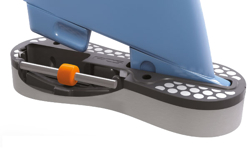
FCS II
The FCS II system eliminates the need for screws and keys, using a snap-in mechanism compatible with the new FCS fin models. It is set to replace the traditional FCS system, which has been the market standard for around 20 years. However, it is still compatible with older fin models, which can be installed in the new plug using a small adapter.
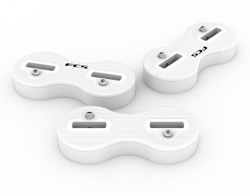
FCS FUSION
Fusion plugs have used the same standard fitting for over 20 years, with the advantage of being lighter, as they are installed during the shaping process so that the plug sits beneath the board's lamination, making it more durable similar to how the FCS II system is installed.
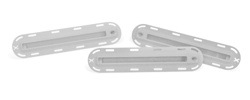
FUTURE
The Futures system originated in California, featuring an innovative design where the fin box is installed during shaping, before lamination, making it more durable. Another advantage is the one-piece fin base, which provides more drive to the board due to reduced vibration.
Tail Shapes
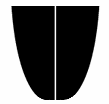
SQUASH
Widely used on small to medium boards, as it provides more tail support in smaller waves, making it the most versatile of all tail shapes.
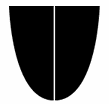
ROUND
Also used on small to medium boards, but better suited for stronger, more hollow waves, helping prevent the board from sliding out too much.
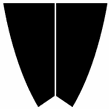
SWALLOW
This tail was designed to break the line of the maneuver more easily and return to the wave line just as easily, providing quick response.
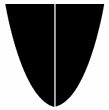
ROUND PIN
For a more controlled ride with smoother lines. Commonly used in hollow waves.
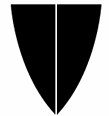
PIN
The ideal tail for guns, used only in big waves, allowing for better bottom turns.
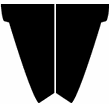
WING SWALLOW
All wing designs are intended to break the outline. Wings are usually used when the front of the board is wider, creating a break in the line to narrow the tail, making it looser and quicker from rail to rail.
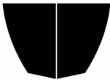
DIAMOND
The idea is that the rail, about one inch shorter than the board's length, makes it perform as if it were shorter, allowing quicker rail-to-rail transitions and direction changes on the wave. It offers greater versatility for radical maneuvers.
Rails
The rails of the board cut through the water, controlling turns and water release.
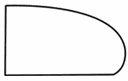
HIGH RAIL
Prevents water from climbing onto the deck, keeping the board more above the water. Generally used in softer waves.
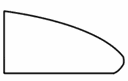
LOW RAIL
Penetrate the water, providing more sensitivity. Used in steeper and bigger waves.